
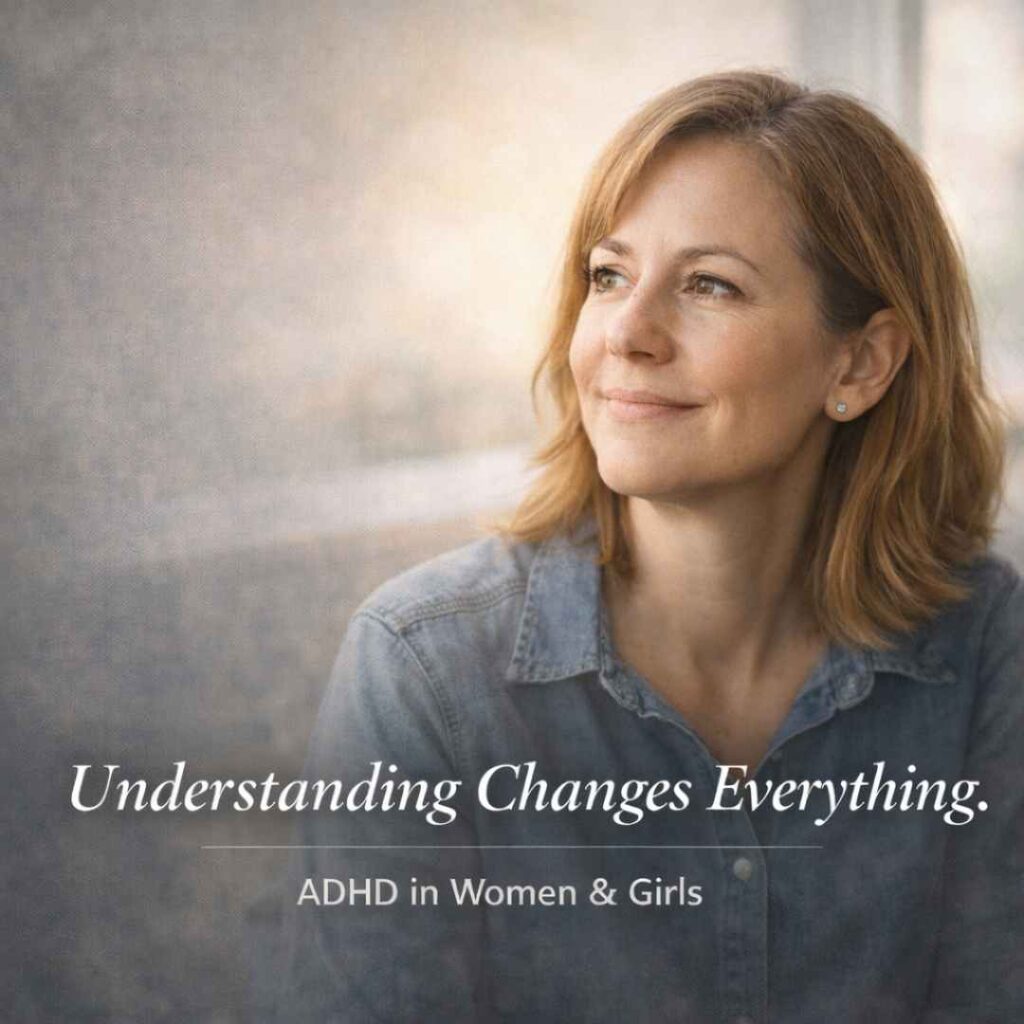
I Finally Understood Why I’d Been Struggling My Whole Life—At 41
When her son was diagnosed with ADHD, Lindiwe saw herself for the first time. Getting help as an adult in South Africa? That’s another story entirely.
The Moment Everything Made Sense
Lindiwe Naidoo sat in my consulting room last year, tears streaming down her face. Not because something was wrong. Because something finally, finally made sense.
She’d brought her ten-year-old son in for an ADHD assessment. Standard appointment. But as I explained how ADHD affects the brain—the working memory struggles, the time blindness, the emotional intensity that comes out of nowhere—she went very quiet. Her hands stilled in her lap. She stopped breathing for a moment.
You’re describing me. You’re describing my entire life.
I’ve seen this moment hundreds of times. It never gets less powerful. A lifetime of confusion collapsing into sudden, painful clarity.
At 41, Lindiwe had spent decades believing she was lazy. Flaky. “Too emotional.” Fundamentally broken in some way she couldn’t name or fix. She’d built a successful career in HR through sheer bloody-minded determination—working twice as hard as everyone else just to appear competent. Just to keep her head above water.
Nobody knew about the three-hour Sunday sessions spent organising her week, colour-coding everything, writing detailed lists—only to lose the notebook by Tuesday. Nobody saw the panic attacks in the office bathroom before presentations. The shame spiral after forgetting another friend’s birthday. The 2am anxiety about whether she’d remembered to pay the electricity bill. Again.
For forty-one years, these were just “Lindiwe things.” Character flaws. Personal failings she needed to try harder to fix. If she could just get her act together. If she could just be more disciplined. If she could just be normal.
They weren’t character flaws. They never were.
And getting the help she needed? That journey would take eighteen months and cost her over R15,000. It would test her patience, her finances, and her faith in a medical system that often seemed designed to make her give up.
Why Adult ADHD Stays Hidden for Decades
Here’s the thing most people don’t realise: ADHD doesn’t appear in adulthood. It’s there from childhood, written into the brain’s wiring from the very beginning. But for millions of adults—especially women—it was never recognised. Never even considered.
The outdated image of ADHD as a hyperactive boy bouncing off walls has done catastrophic damage. Girls and women more commonly show the inattentive presentation—the daydreaming, the internal chaos, the quiet struggle to keep up while looking like everything’s fine.
They’re not disruptive, so nobody notices. They don’t cause problems in class. They just get labelled “ditzy” or “scatterbrained” or “not reaching her potential.”
And so they learn to mask. To compensate. To work three times harder than everyone else just to produce the same results. And they internalise a devastating message: there’s something wrong with me.
The brain science is clear. ADHD involves differences in the prefrontal cortex—the brain’s CEO, responsible for planning, prioritising, and impulse control. It’s also about dopamine, the neurotransmitter that helps us feel motivated and focused. In ADHD brains, this system doesn’t work as efficiently. Not because of laziness. Not because of lack of willpower. Not because you’re not trying hard enough. Because of neurology. Because of how the brain is built.
Think of it this way: most brains have a reliable autopilot system that handles routine tasks automatically. Getting dressed, making coffee, remembering appointments—these things happen without enormous mental effort. The ADHD brain’s autopilot keeps switching off. Randomly. Without warning. Every simple task requires manual override. Conscious effort. Constant vigilance.
It’s exhausting. Soul-crushingly exhausting. And it’s completely invisible to everyone else.
How many have been diagnosed and are receiving appropriate support? A tiny fraction. The rest are out there right now—struggling, exhausted, wondering why life feels so much harder for them than for everyone else. Wondering what’s wrong with them.
The Obstacle Course of Getting Help
Lindiwe’s journey after that initial recognition was, frankly, brutal. And her experience is heartbreakingly typical.
Here’s the reality that most people don’t understand: if all you want is a script, almost any doctor in South Africa can give you one. Stimulant medications are available, and a GP who’s willing can write a prescription. Problem solved, right?
Wrong. So wrong.
Do you want a proper diagnosis? The right treatment, not just any treatment? Appropriate follow-up and management that actually addresses your specific situation? That’s an entirely different story. That’s where the obstacle course begins.
Getting a comprehensive adult ADHD assessment is extraordinarily difficult. The prevailing attitude in much of the medical community is that ADHD is overdiagnosed—a convenient excuse for laziness or lack of discipline. A fashionable diagnosis for people who just need to try harder.
Adults presenting with symptoms are often met with raised eyebrows and barely concealed scepticism. Lindiwe heard it from her first GP: “ADHD is overdiagnosed these days. You’ve managed fine until now. Maybe you just need better time management skills.”
Managed fine. Let that sink in.
“Managing fine” had meant chronic anxiety that never fully lifted. Depression that came in waves she couldn’t predict. A failed marriage where her husband couldn’t understand why she “just wouldn’t” do simple things—not realising she couldn’t. Working herself into the ground, arriving early and staying late, just to produce what came easily to her colleagues. Living in constant fear of being found out as the fraud she believed herself to be.
She’d survived. Therefore, clearly, nothing was wrong.
This dismissive attitude means that securing a proper assessment can feel like fighting through treacle. Specialists who actually understand adult ADHD are concentrated in major cities—and there aren’t nearly enough of them. Waiting lists stretch for months. Medical aids cover a fraction of the cost, if anything at all. Every step forward requires energy that ADHD makes harder to summon.
And here’s what too many people don’t realise: receiving a script for medication doesn’t equal treatment. Not even close.
Adults who’ve spent decades developing compensatory mechanisms. Who’ve accumulated years of secondary anxiety and depression. Who’ve built entire lives around working twice as hard as everyone else. Who’ve internalised shame and self-criticism so deep it feels like part of their personality. They need far more than a pill. They need someone who sees the whole picture.
We see this pattern repeatedly, particularly in women. For years—sometimes decades—they’ve been diagnosed and treated for anxiety. Put on antidepressants. Told to practise mindfulness. Try yoga. Get more sleep.
They’ve been managing the consequence rather than addressing the cause. The depression lifts temporarily. The anxiety dulls slightly. But nothing fundamentally changes because nobody identified what was actually driving everything else. Nobody asked the right questions. Nobody looked deeper.
When Lindiwe finally received proper treatment—not just medication, but comprehensive management including therapy, practical coaching, and lifestyle modifications tailored to how her brain actually works—something shifted.
The medication didn’t change her personality. It didn’t make her someone else. It gave her access to the focus and calm that had always been there, trapped behind faulty wiring. Like glasses for a brain that couldn’t see clearly. Suddenly she could reach what had always been hers.
I’m still me. I’m just… me without the static. Me without fighting myself every single moment of every single day.
What You Can Do If This Sounds Like You
If Lindiwe’s story has hit you somewhere deep—if you’ve spent years wondering why everything feels harder for you, why you can’t just be normal—here’s a practical path forward.
Start with self-screening. The World Health Organisation’s Adult ADHD Self-Report Scale (ASRS) is freely available online. It takes ten minutes. It’s not a diagnosis, but it’s a credible starting point. If you score in the elevated range, that’s information worth taking seriously—not dismissing as “everyone feels like that sometimes.”
Document your history. This is crucial. ADHD is present from childhood—it doesn’t suddenly appear at 40. Before any assessment, gather evidence: old school reports, conversations with parents or siblings about what you were like as a child. Comments like “bright but doesn’t apply herself” or “could do better if she tried” or “away with the fairies” are telling. They’re not ancient history. They’re diagnostic gold.
Find an appropriate specialist. This matters enormously. You need someone with specific expertise in adult ADHD—not all psychiatrists or psychologists have this training. Many don’t. Ask directly: “How many adult ADHD assessments do you conduct each year?” Don’t be afraid to push. A paediatrician like myself who specialises in ADHD can also assess adults and often has deep expertise in recognising the full picture—including how childhood patterns persist and morph into adulthood.
Be prepared to advocate for yourself. You will encounter scepticism. Count on it. “You seem so organised.” “But you’re successful.” “Everyone struggles with focus these days.” These dismissals sting because they invalidate decades of hidden struggle. Remember: high-achieving adults with ADHD have often developed elaborate, exhausting coping strategies that mask their difficulties from the outside world. The effort behind that mask is invisible. Your pain is real, even if others can’t see it.
Understand the treatment options. Medication isn’t the only intervention, but for most adults, it’s the foundation that makes everything else possible. Stimulant medications like methylphenidate (Ritalin, Concerta) and lisdexamfetamine (Vyvanse) have decades of safety data behind them. They don’t work for everyone, but about 80% of adults experience significant benefit. Non-medication approaches—coaching, therapy, environmental modifications—work best alongside medication, not instead of it.
Plan for the financial reality. I’ll be honest: getting properly diagnosed and treated for adult ADHD in South Africa is expensive. The initial assessment, medication titration, follow-up appointments, ongoing prescriptions—the costs accumulate. But consider the cost of not treating it: lost productivity, damaged relationships, mental health consequences, career limitations, the slow erosion of self-worth. Untreated ADHD has its own price tag. It’s just hidden in plain sight.
Quick Win Tonight
Take the ASRS screening 10 min
Search “WHO Adult ADHD Self-Report Scale” and complete it honestly. No minimising. No “but everyone feels like that.” This isn’t about finding excuses—it’s about understanding yourself.
Write three sentences about your childhood 5 min
Were you “away with the fairies”? Always losing things? The emotional one? Easily bored, needed constant stimulation? Bright but never quite reaching your potential? These patterns matter more than you know.
Tell one trusted person
You don’t have to figure this out alone. You’ve been alone with this long enough. Say: “I’ve been reading about adult ADHD, and I’m wondering if it might explain some things for me. Can I talk to you about it?”
Remember This
If you’ve spent your whole life feeling like you’re running on a treadmill that everyone else seems to navigate effortlessly—you’re not imagining it. If you’ve felt like a fraud waiting to be exposed, like you’re working twice as hard just to keep up, like something fundamental is wrong with you that nobody else can see—you’re not crazy. And you’re not broken.
You might simply have a brain that works differently. One that nobody thought to check. One that’s been fighting against itself for decades while you blamed yourself for losing the battle.
It’s never too late to understand yourself. Lindiwe was 41. I’ve assessed adults in their sixties who finally made sense of a lifetime of struggle. The diagnosis doesn’t erase the past—the lost opportunities, the damaged relationships, the years of unnecessary shame. But it transforms how you move forward. It changes everything.
Understanding changes everything.
Ready to understand your unique brain better?
Dr John Flett is a specialist paediatrician with over 20 years’ experience in ADHD assessment and treatment. While his practice focuses primarily on children and adolescents, he understands that ADHD is a lifespan condition—and that parents often recognise themselves when learning about their child’s diagnosis. He sees the whole picture.